







Footwear Care & Waterproofing
Keep Your Outdoor Boots Waterproof, Clean, and Field-Ready
Mud, grit, sweat, salt, and old surface treatments reduce boot performance over time — often long before the waterproof lining actually fails. A regular care routine using the right cleaner and the correct proofer for your boot material extends the working life of walking boots, work boots, wellington boots, and leather footwear significantly. Wylies Outdoor World stocks Nikwax and Storm — two of the most trusted names in outdoor footwear care — covering cleaners, conditioners, waterproofing sprays, waxes, proofers, and complete boot care kits for every material type.
Nikwax Footwear Cleaners and Waterproofing for Walking Boots
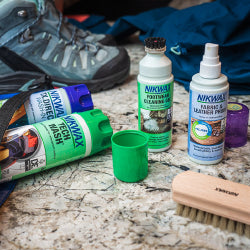
Nikwax is the go-to choice for technical footwear care on breathable waterproof boots. The range covers dedicated cleaners that remove contamination without damaging waterproof membranes, leather conditioners and waxes for smooth leather boots, and spray-on proofers for fabric-and-leather and synthetic footwear. The clean-first, reproof-second approach Nikwax recommends is the correct sequence for restoring water beading on walking boots that have started to wet out. Browse Nikwax footwear care products at Wylies to find the right product for your boot material.
Storm Boot Proofers for Leather, Suede, and Nubuck Footwear
Storm covers the leather, suede, and nubuck end of the boot care range — conditioners that nourish and protect smooth leather, suede, and nubuck; treatments that restore repellency without flattening the finish, and spray-on proofers for synthetic and combination uppers. If your boots are leather or suede and need conditioning as well as waterproofing, Storm is the stronger choice. Browse Storm boot care and waterproofing products at Wylies to find the right treatment for your footwear.
Choosing the Right Boot Care Product for Your Footwear Material
Smooth leather boots need a leather conditioner, wax, or leather-specific waterproofing treatment — not a fabric proofer. Suede and nubuck boots need dedicated suede or nubuck care to restore repellency while preserving the surface texture. Fabric-and-leather boots need a treatment made for combination uppers and breathable waterproof linings. Rubber Wellington boots need rubber boot care rather than a leather or fabric proofer. Applying the wrong product to the wrong material can damage the upper or reduce rather than restore performance, so matching the product to the material is the most important step.
Why Outdoor Boots Lose Water Repellency Over Time
Outdoor boots often start to absorb water at the surface because dirt and contamination are sitting in the outer material — not because the waterproof lining has failed. In many cases, cleaning the boot properly can revive surface water beading without any reproofing at all. When cleaning alone is not enough, the correct proofer or waterproofing wax restores wet-weather performance. What a waterproofing product cannot do is repair torn fabric, cracked rubber, split leather, failed stitching, or a damaged waterproof membrane — it maintains and restores the outer material, not the boot's structural integrity.
Boot Care and Waterproofing Questions Answered
Do I need to clean boots before waterproofing them?
Yes — cleaning should always come first. Mud, grit, and contamination prevent waterproofing products from bonding properly with the boot material. Clean the boot, remove loose dirt, allow the material to reach the condition specified in the product instructions, then apply the correct proofer, wax, or conditioner.
Which boot waterproofer should I use for my boots?
Choose by material. Smooth leather needs leather wax, conditioner, or a leather-specific waterproofing treatment. Suede and nubuck need dedicated suede or nubuck care. Fabric-and-leather boots need a treatment made for combination footwear. Rubber wellies need rubber boot care. Applying a fabric proofer to leather, or a leather wax to fabric, will not give the right result.
Can waterproofing products fix leaking boots?
Waterproofing products restore surface water repellency — they cannot repair physical damage. If the boot has split seams, cracked rubber, torn fabric, damaged stitching, or a failed waterproof membrane, a proofer may improve the outer surface but will not fix the underlying leak.
How should I dry walking boots after cleaning?
Dry boots slowly at room temperature. Remove laces and insoles where possible, open the boot for airflow, and avoid radiators, open fires, or direct heat — fast drying damages leather, adhesives, and boot construction.
How often should I reproof outdoor boots?
Reproof when clean footwear stops beading water on the surface. Heavy rain, mud, long walks, outdoor work, and frequent cleaning all shorten the time between treatments. Use water beading as the practical test rather than a fixed schedule.
Ask Drew About Boot Care and Waterproofing Products
Wylies Outdoor World's owner Drew is happy to help if you are unsure which cleaner, proofer, or conditioner suits your boot material. Contact Drew at Wylies before you order.
-
Vendor:Nikwax
Nikwax Waterproofing Wax For Leather - 60ml
Waterproof leather boots with waxYour hiking boots have lost their waterproofing and look scuffed from trail use. Regular leather treatments don't restore waterproofing properly, and some damage the leather. Nikwax Waterproofing Wax for Leather restores waterproofing while enhancing color and reducing scuff marks.Best wax...- £3.28
£4.49- £3.28
- Unit price
- per
Save £1.21 -
Vendor:Nikwax
Nikwax Spray On TX Direct - 300ml
Nikwax Spray On TX Direct - Professional Waterproofing TreatmentThis Nikwax Spray On TX Direct is the professional choice for waterproofing clothing with wicking liners and technical outdoor gear. Unlike basic waterproofing sprays, this water-based formula adds or renews water repellency while maintaining breathability -...- £10.15
£10.99- £10.15
- Unit price
- per
Save £0.84 -
Vendor:Nikwax
Nikwax Waterproofing Wax- Black 100ml
Specifically designed for smooth leather footwear, this high performance cream from Nikwax optimises the breathability and wet weather protection offered by your footwear. Simple to apply, this cream replenishes tanning agents. Specifications: Exceptional waterproofing performance Restores colour and enhances the shine of leather Reduces...- £3.68
£4.99- £3.68
- Unit price
- per
Save £1.31 -
Vendor:Grubs
Grubs Revivex
Grubs ReviveX® Rubber Boot Saver maintains the ‘like new’ look and helps preserve flexibility and colour. ReviveX protects against the degrading effects of the sun. Grubs Rubber Boot Saver is also ideal for all types of vinyl, Hypalon, latex, plastics and nylon. Available to...- £11.95
£11.95- £11.95
- Unit price
- per
Save £0.00